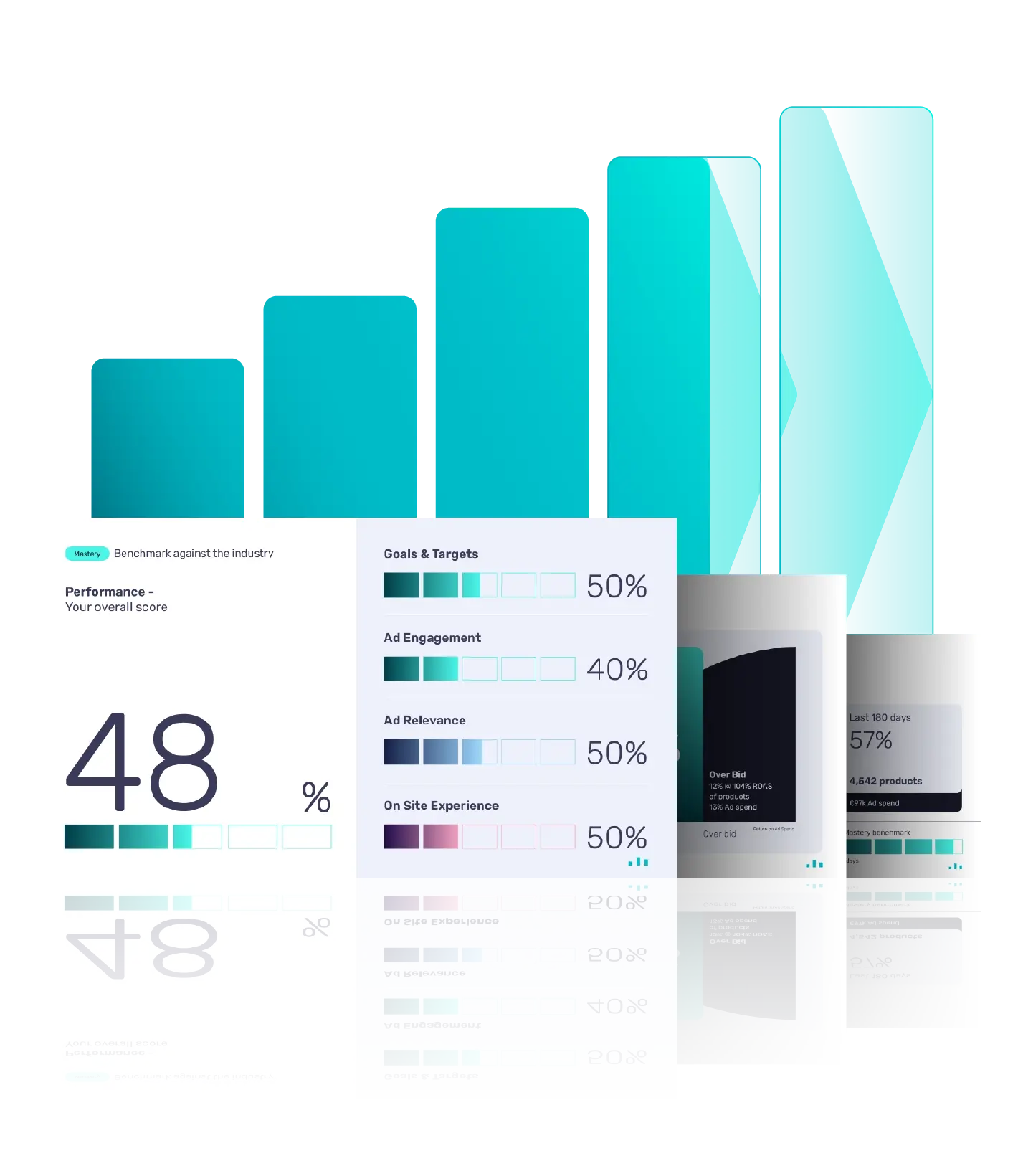
Track your competitors on Google Shopping
Stop guessing who you're competing against.
Track competitor performance, monitor position changes, and identify winning strategies with real-time Google Shopping intelligence.
10,000 +
Search Terms Tracked
24/7
Real-Time Monitoring
The Competition Tracking Problem
Google's built-in tools only tell part of the story. Here's what you're missing:
.webp?width=390&height=390&name=Incomplete%20data@2x%20(2).webp) Incomplete Data
Incomplete Data
Google Auction Insights shows limited competitors and sampled data, leaving you blind to real-time market shifts.
 Manual Tracking
Spending hours checking competitor positions manually means less time optimising your actual campaigns.
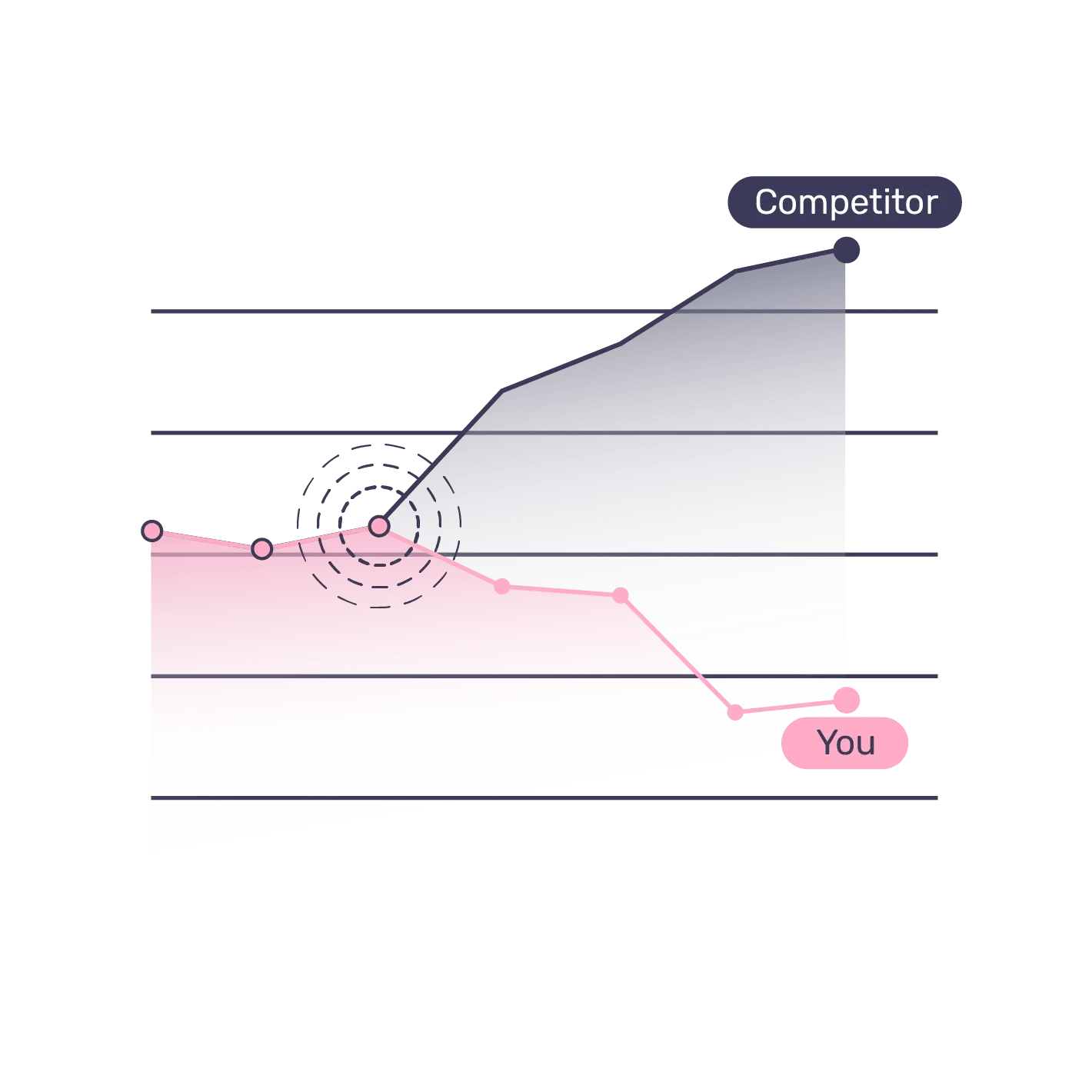 Missed Opportunities
By the time you notice a competitor's strategy change, they've already captured market share you'll never recover.
Our approach:
Keyword-level competitor intelligence
Track who's competing, their market share, and how it changes over time.
Connect Google Ads
- 10x search terms Manual Entry - 5x search terms
- Daily position monitoring
- Up to 10 search terms tracking
- 30-day data history
- Monthly email reports
Book a call
Tailored to your business needs
- Multiple daily monitoring
- Unlimited search terms
- Unlimited competitors tracking
- Complete historical data
- Weekly email reports
- Industry benchmarks
- Custom alerts & notifications
- Competitor pricing insights
- Market share analysis
- Initial strategy session
We pushed what Share of Voice analysis can deliver and made it available for free.

Real-Time Position Tracking
Keep a close eye on the market as it constantly evolve, see who is gaining visibility, and who is disappearing from the carousel.

Competitor Benchmarking
Pinpoint your position for priority terms and see who your real competitors are, beyond the usual suspects and ecommerce giants.

Data-Driven Validation
Determine how much visibility your budget can get you for a given ROAS target or CPC to validate your marketing strategy.
We built the Visibility Tracker to provide actionable insight
Why should I connect my Google Ads account instead of tracking competitors without it?
Connecting your Google Ads account significantly improves the accuracy and relevance of competitor and visibility insights.
It allows the platform to automatically identify the most commercially relevant search terms to track, and expand coverage by doubling the number of tracked queries.
You will also unlock tailored campaign benchmarks specific to your industry
How do you access my Google Ads account, and is it safe?
We access your Google Ads account using Google OAuth, Google’s official and secure authorisation method. You never share your Google password with us, and you can revoke access at any time from your Google account.
We request access that allows us to view all necessary Google Ads data so we can provide accurate insights and reporting.
While this level of access technically allows full visibility into your account, we use it strictly to view and analyze data. We never create, edit, or delete campaigns, ads, budgets, or settings.
Your data is used only to provide our service and is never shared or sold to third parties.
How do ecommerce teams typically assess competitor visibility on Google Shopping?
Most teams start by asking a simple question: who is visible when shoppers search for our products?
In practice, competitor visibility isn’t evenly distributed. It varies by search intent, product type, and timing. That’s why experienced teams look beyond account-level metrics and focus on visibility at the search-query level, where real competitive pressure exists.
Why does impression share often fail to reflect true competitive pressure?
Impression share is averaged across many products and searches, which can mask what’s happening on commercially critical queries.
It’s common to see competitors dominate a small group of high-value searches while remaining relatively invisible elsewhere. This is why leading teams focus less on total impression share and more on where visibility is gained or lost, and against whom.
How can you tell whether competitors are bidding more aggressively or benefiting from stronger signals?
Because bids aren’t directly observable, aggressiveness is inferred through ranking behaviour and visibility stability.
When a competitor consistently outranks others without meaningful price changes, experienced practitioners look beyond bids to factors such as feed quality, historical performance, and conversion signals — all of which influence Shopping rankings.
How do you identify which Google Shopping searches competitors prioritise?
Competitors rarely compete uniformly.
Instead, they concentrate visibility on specific brands, categories, or high-intent searches. Identifying these priorities requires analysing repeat visibility patterns over time, not just occasional overlap in campaign-level reports.
Why does competitor behaviour shift so sharply during promotions and peak periods?
Google Shopping competition becomes far more selective during peak trading periods.
Competitors often increase visibility only on discounted or high-margin products, reduce exposure elsewhere, or reallocate spend rapidly. Understanding these shifts requires historical visibility context, not just real-time snapshots.
Start your journey
with Bidnamic
A very successful journey starts with a plan:
- 01 Understand your goals kick-off call
- 02 Free account audit + diagnosis
- 03 Tailored proposal for your strategy
Are you staying ahead of your competition?
Have a sneak peek at our Google Ads account audit process and see what insights you can unlock for free.